PBR Destination in an L3Out
7:16
Prior to APIC Release 5.2, PBR destinations must be in a BD, not in an L3Out. Starting with APIC Release 5.2, PBR destinations can be in an L3Out, which provides a more flexible design for service insertion.
Related Videos
In Data Center Fabrics
-
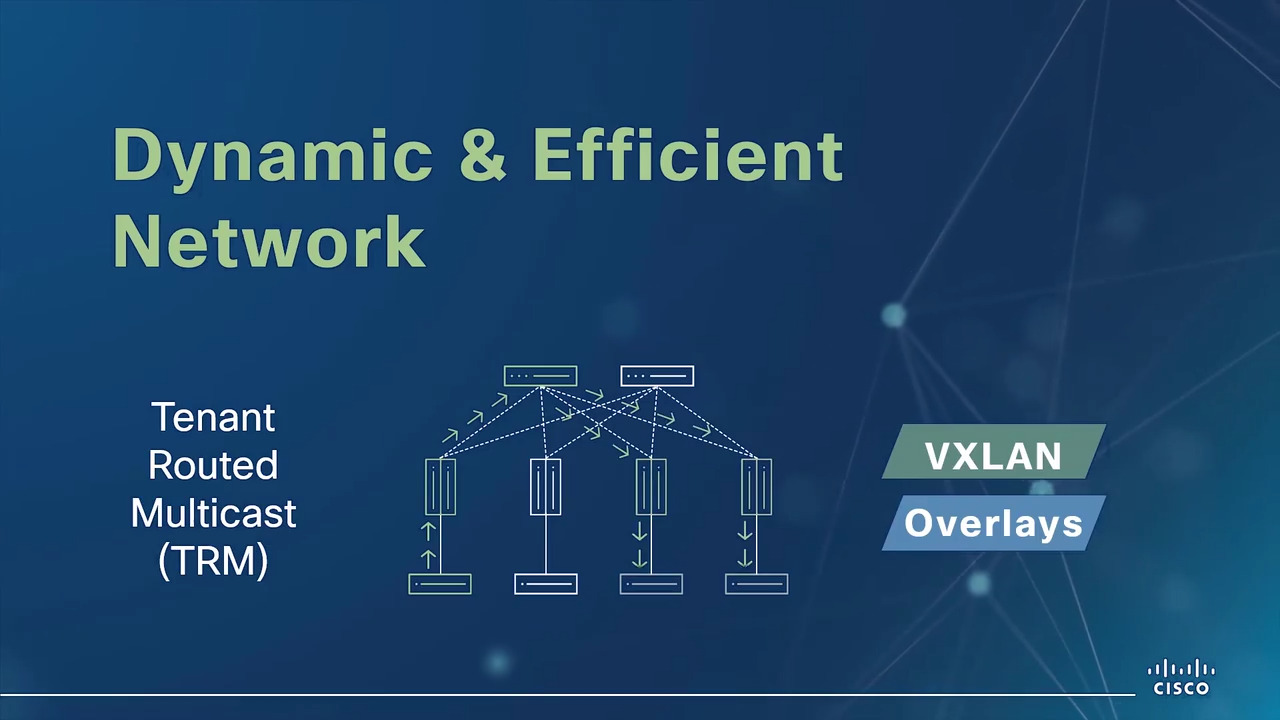
Play video Bridging the gap with VXLAN EVPN
Bridging the gap with VXLAN EVPN
Learn and understand the benefits of choosing VXLAN EVPN as your fabric mode.
4:34
-
Play video Seamless Kubernetes Connectivity: Isovalent Private Networks over VXLAN EVPN
Seamless Kubernetes Connectivity: Isovalent Private Networks over VXLAN EVPN
Integrate K8s and Cisco NX-OS via VXLAN EVPN. Extend cloud-native networking to virtualized workloads, use a distributed routing model without central gateways, and maintain end-to-end policy consistency with SGTs that scale with your workloads.
10:05
-
Play video Unifying Kubernetes and Data Centers: End-to-End Visibility with Isovalent and Cisco Nexus One
Unifying Kubernetes and Data Centers: End-to-End Visibility with Isovalent and Cisco Nexus One
Integrate Isovalent Cilium Timescape with Cisco Nexus One for a single, coherent view across K8s clusters and fabric. Eliminate blind spots, troubleshoot with confidence, and accelerate MTTR.
9:34
-
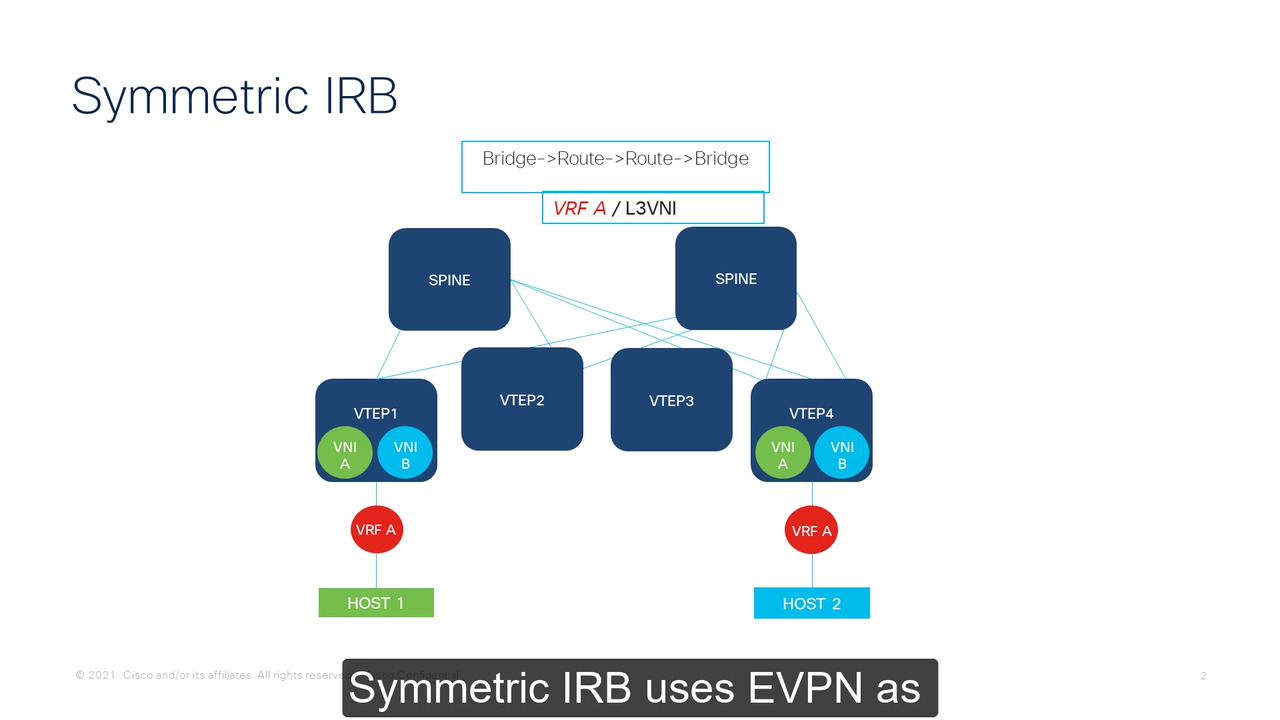
Play video NX-OS 10.2: EVPN Hybrid IRB Mode Overview
NX-OS 10.2: EVPN Hybrid IRB Mode Overview
This feature allows NX-OS VTEPs operating in Symmetric IRB mode to seamlessly inter-operate with VTEPs running in Asymmetric IRB mode within the same VXLAN EVPN fabric.
9:35
-
Play video NX-OS 10.2: Inter-VRF and Multi-site Service Chaining Overview
NX-OS 10.2: Inter-VRF and Multi-site Service Chaining Overview
Learn about ePBR enhancements on Inter-VRF service chaining and multi-site support introduced in NX-OS 10.2 and use cases now available with this new capability.
9:43
-
Play video It's all about packet control
It's all about packet control
Learn how VXLAN defines a packet and how EVPN works with VXLAN in what it needs to do. VXLAN and EVPN working together are powerful.
2:42